
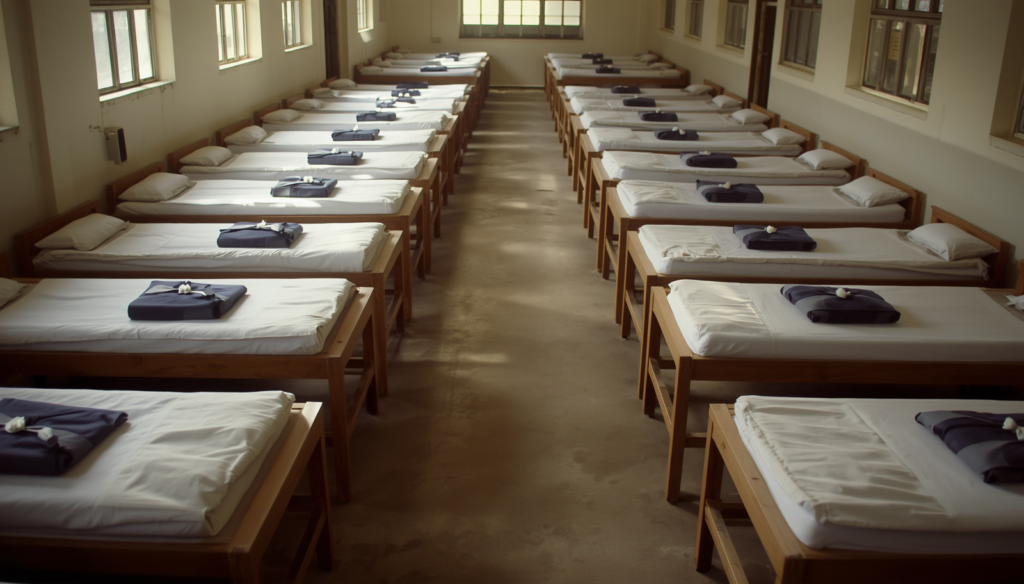
Yesterday at Gilgil Stadium, Kenya stood before sixteen empty places, facing questions too heavy for microphones. The prayers rose, songs trembled, leaders stood with families, and First Lady Rachel Ruto joined a nation in silence. Yet somewhere in that silence, every parent could hear the whisper: these were not numbers; these were daughters who had been sent to school with uniforms, pocket money, instructions, and dreams, only to return to their families in a way no home should ever receive a child.
Dear parent, allow me to speak softly, because this is not a day for shouting but for painful honesty. When our children are small, we hold them like eggs that may break; we follow them around the house; we remove every danger from their path; and we tell ourselves that love is protection. Then, almost suddenly, we send them away with too much freedom, too much money, too many secrets, too many phones, and too little presence, as if a child becomes mature simply because a school gate has closed behind them.
Teachers in schools are whispering what many parents do not want to hear. Some children arrive not only with boxes and bedding but also with an authority that has already defeated the home. It is no longer shocking, some say, to find a learner with Sh15,000 or Sh20,000 in pocket money, because one relative gave some, another aunt added some, the mother sent more, and nobody stopped to ask whether a child really needs that much cash at school. We may not be deliberately buying rebellion, but when we give a child adult money without adult wisdom, we may be funding temptations we later condemn.
We are also raising children who can lead parents, negotiate discipline, threaten teachers, and hide behind family protection whenever correction comes. Many teachers will tell you, with sadness, that some of the hardest discipline cases do not always come from the poorest homes but from homes where comfort has replaced boundaries. A busy parent pays fees, sends money, buys a phone, and hopes that love can be outsourced to a teacher already carrying a classroom, a dormitory, a syllabus, counseling, and security.
Then there is the invisible school beyond the school, the WhatsApp groups and countrywide updates, where peer pressure travels faster than wisdom, where one strike can become a song, one rumor can become a plan, and one angry child can pull many others into darkness. We must not pretend technology is neutral when our children are more connected to each other’s anger than to adult guidance.
Yes, dormitories must be safe, doors must open, beds must not crowd, alarms must work, boards must inspect, principals must act, the government must enforce, and teachers must never ignore warning signs. But after saying all that, Kenya must still ask the harder question: who is shaping the child before the fire, before the strike, before the group chat, before the pocket money, before anger becomes action?
The World Cup is here, and football may now teach us what tragedy has forced us to learn. No team leaves the goalkeeper alone and still expects a clean sheet. Even the striker runs back when danger comes, the midfielder closes the space, the defender covers the weak side, the captain talks, the coach adjusts, and the fans celebrate only because eleven people accepted both competition and cooperation.
Our children are the goal we must protect together. Teachers cannot do it alone. Parents must be present, communities must get involved early, and government must act before tragedy strikes, not after. Schools should compete for academic excellence while cooperating on safety. Parents should do their best for their children while standing together on discipline. Students should compete in class while learning to care for and protect one another.
Sixteen empty beds are calling on Kenya to return to position, and until we answer, the nation should not sleep comfortably again. Think green, act green.