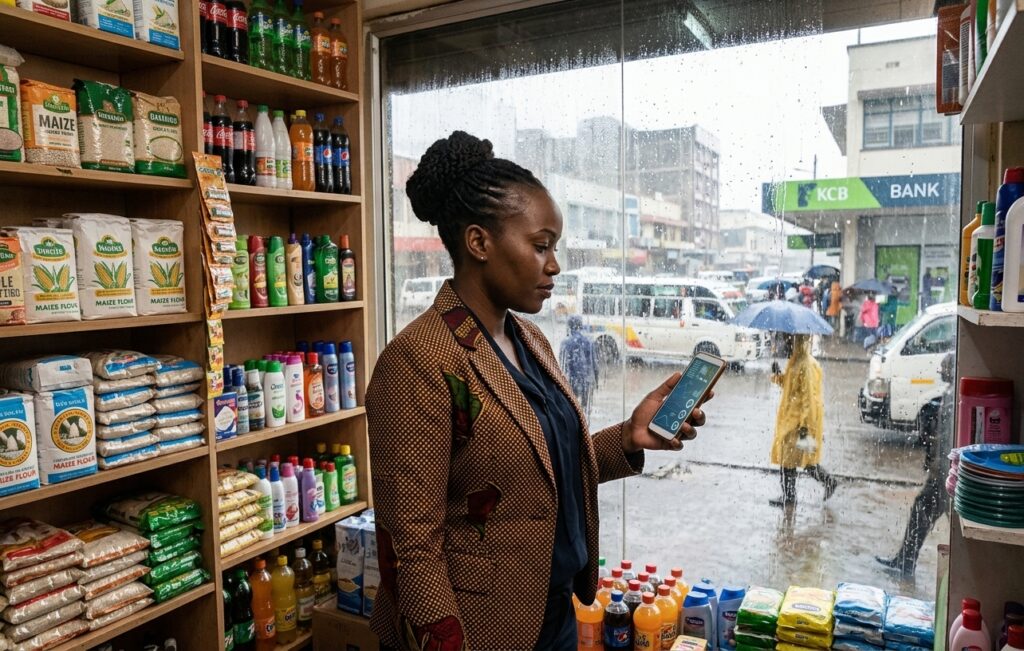
Imagine a shopkeeper in Kisumu stocking up for a busy weekend, her shelves full and her money committed, when the rain arrives and quietly shifts what her customers want. By the time she notices, some of that stock has become a loss. What if she had known two days earlier?
That question followed me home from the executive forum PwC Kenya organized on Thursday, September 24. One demonstration combined weather, sales, and stock data, saw that rain would soften demand in Kisumu, and proposed moving crates to Nakuru, where shelves were nearly bare. It took less than a minute, then stopped because the value crossed a limit its owners had set and asked a human to approve. I smiled because I have known men who move far more than that without asking anyone.
Beyond my daily use of these tools, that moment clarified everything. AI can detect a pattern early enough for us to act, weigh what it sees, explain itself, and offer a choice. What it cannot do is understand the circumstances of a family in Kisumu or shoulder the blame when its advice is wrong. That responsibility remains ours.
A second demonstration involved reading supplier invoices of every shape and checking them against the tax registers, a task anyone who has lost a Saturday to paperwork will appreciate. One finding stayed with me. An invoice with flawless arithmetic was still wrong because tax had been charged on an exempt line. 864 shillings that no rule would have caught were found because someone went back and looked again.
Now look beyond the shop, where a farmer is deciding when to harvest, a clinic is trying not to run out of medicine, a county should be clearing its drains, and forecasters expect these short rains to arrive early, at about 150 percent of average. We could know which boreholes have failed, which drains clog first, and which of the trees we planted are still alive. The question is the same: what do we need to know sooner, and what would we do differently if we knew it?
This is where leaders must stop admiring tools and start naming problems. PwC’s survey of 4,454 chief executives found that only 12 percent saw both higher revenue and lower costs, and 56 percent saw no real benefit. Meanwhile, 64 percent of African workers say they already use it at work. Our people are moving, while our institutions are still clearing their throats. If your team is waiting for a policy nobody is writing, that is not caution; it is missing motion at what I call the speed of life.
When asked what holds them back, nearly half of us who attended the PWC session at the Capital Club pointed not to the machines but to their own records. That should sober us, for it is our oldest weakness. We count what we plant, not what survives; we announce and rarely return to verify. A system that senses but never verifies is only a faster photograph. No company or country can be wiser than what it has honestly recorded.
Keep asking the uncomfortable questions, especially when livelihoods, health, or rights are at stake. Could private information be leaked? Might the advice be unfair? What does it cost in money, energy, and water? Who is accountable if a decision harms someone?
My friends across Kenya and Africa, let’s not send our people on a course and call it a strategy. Let’s sit with those who live the problem, ask what they need to know sooner, test a small change, then return to see whether it helped. System transformation starts right there.
We now have e‑agents monitoring rainfall at a warehouse, and the same forecast should prompt drainage crews, fodder, seedlings, and improved efficiency across our institutions. The rain is coming, so let us be the generation that saw it early and acted in time. Think Green, Act Green.