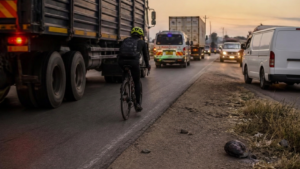
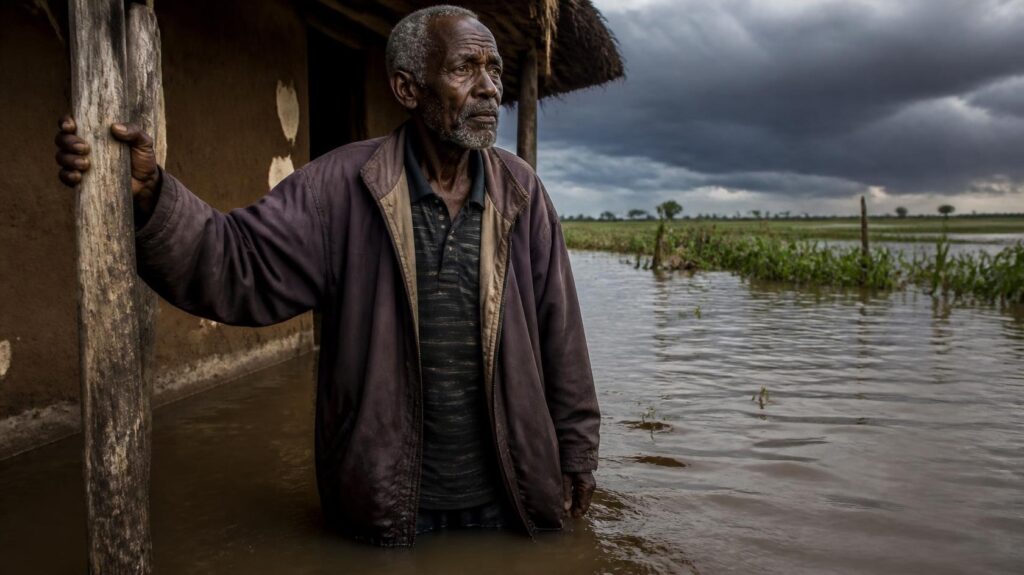
Some warnings carry memories. A recent discussion about another powerful El Niño has taken me back to 1997 and 1998. I witnessed that season firsthand. Relentless rain made roads impassable, damaged infrastructure, isolated communities, destroyed crops, and disrupted livelihoods. What looked like abundant water quickly became a transport, food, health, and economic crisis.
Nearly three decades later, what troubles me is not only the forecast but also the dangerous casualness with which we appear to be receiving it.
On July 31, the World Meteorological Organization warned that a strong El Niño was intensifying, with wetter-than-normal conditions expected across the Greater Horn of Africa. A positive Indian Ocean Dipole may also develop, amplifying regional effects.
Scientists caution that each El Niño is different and that forecasts indicate likelihood, not certainty. “Super El Niño” is not an official scientific category. Accordingly, Kenya must follow the latest forecasts from the Kenya Meteorological Department.
For sure, uncertainty is not an excuse for inaction but a reason to prepare.
Three days later, on August 3, Ethiopia mourned 14 people killed in a rain-triggered landslide at the Tsadqane Debre Mitmaq St Mary Monastery. Of course, that tragedy cannot be directly attributed to the developing El Niño, but it reminds our region of what heavy rainfall can do when it meets vulnerable communities and weak systems. The United Nations says that just 24 hours of effective warning can reduce disaster damage by about 30 percent.
Kenya has already paid an unbearable price, as government estimates place the losses and damage from the 1997–98 El Niño between US$800 million and US$1.2 billion. The 2024 floods reportedly killed about 315 people, affected roughly 410,000, and caused damage estimated at KSh187 billion. In March of this year, floods killed more than 100 Kenyans. Need I say more?
These are not just weather statistics. Each number represents a family whose life is split into before and after the rains. Children are forced to leave school, farmers lose an entire season’s harvest, traders lose their livelihoods, and homes built over many years are destroyed in moments.
Kenya’s greatest climate danger may not be El Niño but our capacity to forget. We remember disasters emotionally, yet forget them institutionally. What a shame.
This projected season will test the National Disaster Risk Management Act and the Disaster Risk Financing Strategy launched this year. Kenya now has a legal and financial framework. What remains is visible implementation.
I believe the national government and every county should urgently publish information on identified floodplains, unstable slopes, vulnerable settlements, and critical infrastructure, including dams, bridges, schools, and hospitals. For each risk, Kenyans should know the preventive measures, allocated funds, responsible officer, deadline, evacuation arrangements, and public health plan. Progress and expenditures should be available on a public dashboard.
A budget line alone does not indicate preparedness, and a warning is not effective simply because it has been issued. Real preparedness is practical, visible, and measurable. It means clearing drainage systems before the rains begin, inspecting and reinforcing dams, strengthening bridges, communicating evacuation routes, pre-positioning medical and relief supplies, and ensuring that vulnerable families are reached early, clearly, and in languages they understand.
Water remembers its path even when planning authorities forget it. We must stop approving construction in waterways, neglecting drainage, and wait for disaster before enforcing planning laws.
Yet rain is not our enemy because Kenya needs this water. Our task is to keep destructive water away from people while preserving productive water for the future. We should restore catchments and wetlands, improve soil absorption, desilt water systems, harvest rooftop rain, and safely direct stormwater into storage and for groundwater recharge.
A forecast is time placed in our hands. The coming rains will test whether Kenya remembers, whether its new institutions work, and whether we value human life enough to act before mourning becomes necessary.
So, will we harvest the rain, or count the losses again? Think green. Act green.