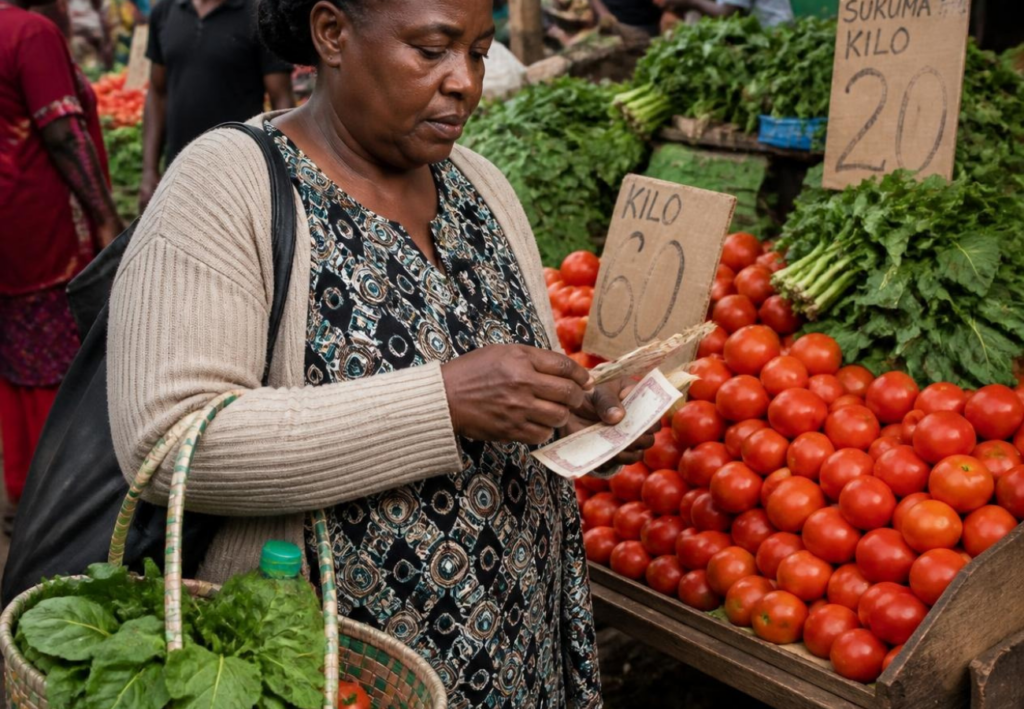
Recently, Susan, my wife, returned from shopping, surprised that the same amount of money bought less. That day, Abraham Moti, whom Susan and I regard as our son, returned from his engineering studies, saying his matatu fare had risen. One felt the pressure at the market; the other on the road. Our conversation left me wondering: were these separate inconveniences or clues to a larger Kenyan story?
Thankfully, I turned to the July 2026 inflation report just released by the Kenya National Bureau of Statistics. They confirmed annual inflation at 6.5 percent. Yet the deeper I examined the tables, the more the headline gave way to a revealing story. Food and transport alone contributed 4.1 percentage points, almost 63 percent of total inflation. Add housing, and these necessities accounted for about 71 percent. Susan’s shopping basket and Moti’s matatu fare were not separate experiences. Together, they revealed the rising cost of survival.
Core inflation, representing stable prices, stood at 3.2 percent. Non-core inflation, driven by volatile essentials, reached 15 percent. Put simply, the prices rising fastest were tied to what families find hardest to avoid.
The national statistic tells us how prices changed. The household receipt tells us how Kenya is working.
Consider one kilogram of sukuma wiki, whose price rose from KSh 92 to KSh 116. Tomatoes moved from KSh 85 to KSh 113, while diesel rose from KSh 173 to KSh 224. These movements are connected. Diesel powers tractors, pumps and trucks. Its cost enters the farm, travels along the road, reaches the market stall and settles on the family’s plate.
A Kenyan household is therefore charged twice, once when food travels to the market and again when people travel to earn the money to buy it.
We must read data honestly. Some prices declined, and slower inflation is welcome. But slower inflation does not mean prices have returned to previous levels. A family does not purchase percentages. It purchases food, transportation, energy, and shelter using income that may not have risen with them.
The lasting response cannot be to argue about the receipt. No. Kenya must produce, preserve, and transport to drive prices down.
Immediate relief remains necessary for families. While relief helps people survive today, resilient systems prevent the same suffering tomorrow. Experience has taught me that affordability is engineered through systems, not wished into existence. We must think and act green by investing in water harvesting, irrigation, healthy soils, seed, affordable energy, rural roads, storage, cold chains, local processing, efficient public transportation, and transparent markets. Each investment must reduce waste, uncertainty, and unnecessary costs for producers and consumers.
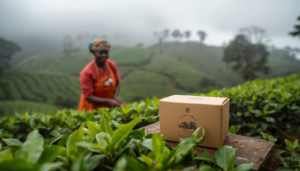
Government must provide infrastructure and fair rules. Business must finance efficiency, processing, and responsible distribution. Communities must organize production and aggregation. Citizens must reduce waste, support productive enterprise, and demand accountability. Above all, farmers must be respected as food manufacturers whose factories are fields.
This is larger than agriculture. It is a national affordability and resilience strategy. A country that harvests rain, protects its soil, stores food safely, processes near farms, and moves people and goods efficiently is better protected against drought, fuel shocks, and disrupted global supply chains. It creates jobs, strengthens local economies, and safeguards household dignity.
Our horizon must extend beyond the next budget, election, or rainy season. A Kenya worth its salt should build the capacity to produce, preserve, process, and transport essential goods reliably. We should measure not only what farms harvest but also how much reaches families, delivered affordably, nutritiously, and without waste.
I am not an economist. I analyze numbers deeply because data can rise above politics and reveal whether our systems serve people. While politics asks who to blame, responsible leadership asks what must be built.
A hundred years from now, Kenyans will still need food, mobility, energy, and dignity. Let us build systems worthy of that future. When production becomes reliable, preservation disciplined, and transport efficient, every household receipt will tell a better national story. Think Green, Act Green.