
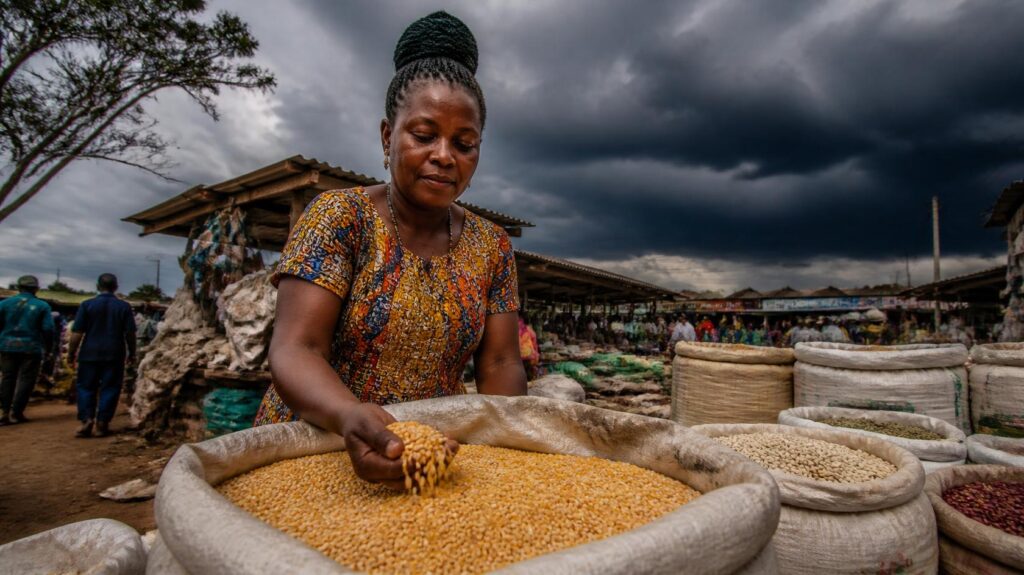
There is good news in our markets this week, and we should enjoy it before asking where it came from. Maize is still affordable, much of it from Zambia and Tanzania. Buy it, cook it, and give thanks. Then walk with me to the calendar, because good news like this has a short season.
While we went about our week, climate scientists from across Southern Africa met in Swakopmund, Namibia, and published a forecast on 28 August. After reading it, I realized it should have stopped every Kenyan newsroom. Most of that region will probably receive below-normal rain this season, and they said so with high confidence for Zambia, Zimbabwe, Botswana, Namibia, and much of South Africa. Put plainly, the granary we have been leaning on is expected to fail.
Now hold that against what is coming to us, because the El Niño drying our neighbors is expected to soak us. The World Meteorological Organization confirmed on September 3 that it is established and strengthening. Our Meteorological Department expects above-normal rain over most of Kenya starting in October, and the Indian Ocean leans the same way. The World Food Program warns it will push 49 million more people into acute hunger.
So one system is handing us a threat and an opportunity at once, both due within eight weeks.
Begin with the water. When the long rains came in March, reports said they killed 112 people across 30 counties. Our towns did not flood because the rain turned cruel. They flooded because we built on wetlands, buried our streams, and left old drains packed with waste. A flood is not too much water. It is water we have left with nowhere to go.
Which brings us to the uncomfortable part. Floodwater is an honest auditor that finds every shortcut ever taken and reads them back to us in public. The wetland someone sold quietly will announce itself loudly in November, and the drain a developer covered will empty into a classroom. Those who placed money ahead of doing right have not escaped the reckoning; they have only moved it to a wetter month.
Every business should be awake because your warehouse, your staff, and your routes sit on that same ground. Urgently clear the channel behind your premises before anyone asks, and look closely at grain, which is never cheaper than in the season before a shortage. On August 11, our Agriculture Cabinet Secretary warned of a 5.4 million-bag shortfall by the end of September, with imports covering less than a fifth of it, while Zambia holds 2.49 million tones for sale. By mid-next year, it may be buying instead.
Millers and traders should be contracting now; the Treasury and the Cereals Board should be storing now; and the Ministry of Agriculture must facilitate certified seed in every agrovet before the first storm, because the rain that threatens our streets will feed our farms. Kenya can enter 2027 as this region’s supplier or its supplicant.
My four decades among farmers taught me that you cannot dig a well on the day you are thirsty. The Food and Agriculture Organization said the same in an appeal that includes Kenya: early action is more effective and less costly than responding after a crisis has escalated. That is not sentiment but arithmetic, because every shilling spent on a culvert in September saves many spent on a funeral in December. Let Parliament convene on it, let county assemblies release the money this month, and let every MCA name the blocked culvert they already know about in their ward.
In November, a mother will stand in the same market where maize is cheap today, and what she pays and whether she gets home dry will be decided now by people who are not thinking about her. Let us be the generation that moved while the sky was clear. Think Green, Act Green.