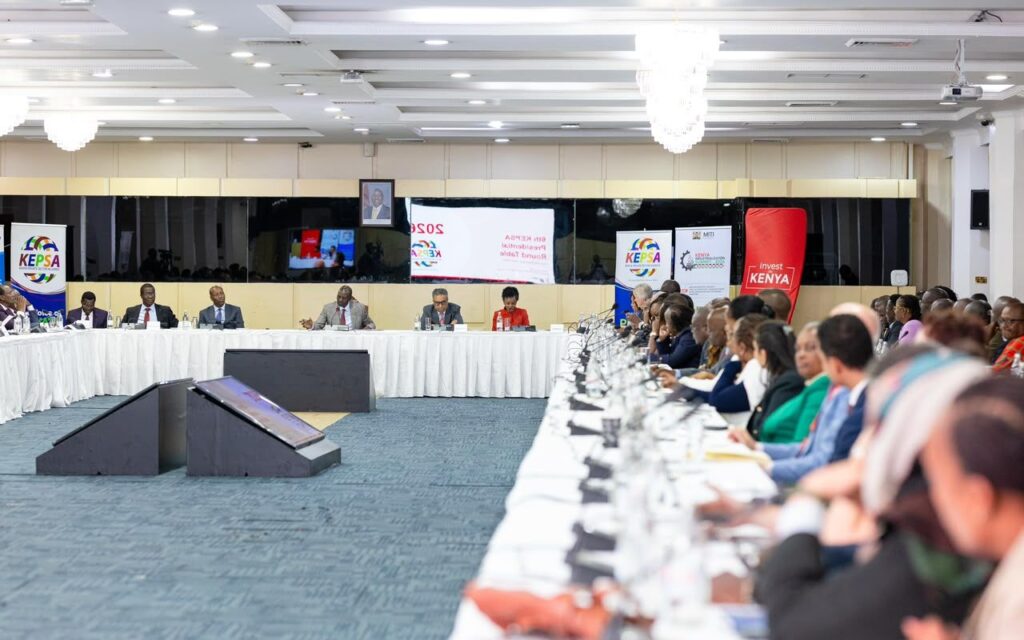
At this week’s 6th Presidential Roundtable, industry players shared firsthand experiences. As Chairperson of the Motorcycle Assemblers Association of Kenya, I valued the candor. Problems were called out directly for correction. That honesty matters because progress begins when we describe our difficulties truthfully and take responsibility for solving them.
The roundtable, Industrialization Summit, and Changamka, which concludes today at the Kenyatta International Convention Center, made me realize that the event brought production into the national conversation like never before. They also left me reflecting on a question: how do we turn these conversations into dependable livelihoods? The organizers’ unmatched creativity, which kept President Ruto actively engaged for 8 straight hours in a single day, deserves recognition. I sincerely congratulate each organizer, including various government arms, the Kenya Association of Manufacturers, the Kenya Private Sector Alliance, the Kenya National Chamber of Commerce, international agencies, and all exhibitors and delegates.
Kenya’s next industrial breakthrough may begin with something ordinary: an order that is delivered, paid for and placed again.
Manufacturing contributed 7.1 percent of Kenya’s economy in 2025, according to the Kenya National Bureau of Statistics. That figure should sharpen our purpose. The creativity displayed at exhibitions needs a dependable market beyond the exhibitions.
A school buys food. A hospital buys linen. A hotel buys cleaning products. A church buys furniture. Behind each purchase can stand a farmer, a tailor, a carpenter, a transporter, and a family planning for tomorrow.
We already spend this money. We can organize its journey more thoughtfully.
The State Department for Industry’s June master roll lists 1,287 products and industrial support services. Kenya also has existing work linking schools with local farmers and small businesses. We have useful starting points. Our responsibility is to make the connections dependable.
Start with one recurring purchase. Set clear specifications. Compare price, quality, and delivery. Identify a capable Kenyan producer. Place a manageable order, inspect it, and pay on the agreed date.
An unpaid invoice can leave a supplier struggling to buy materials or pay wages. A business can have customers and still struggle to survive while waiting for payment. Prompt payment is a practical act of nation-building.
Government must resolve verified payment obligations through credible, funded plans. Private buyers can honour the commitments already within their control.
Affordability matters. A family under pressure should never be shamed for choosing what it can afford. Kenyan producers must earn confidence through safe, competitive products. A Kenyan address on an invoice does not establish how much production happened here.
The green connection I always advocate for begins before the factory gate. Food processing requires dependable harvests. Harvests require healthy soils and reliable water. Production requires energy and materials. Protecting these foundations is economic stewardship.
Some materials we discard can supply another enterprise. That opportunity becomes real when someone needs them, accepts their quality, and pays fairly for their recovery. Clean-up needs a destination for the collected material, and collectors deserve income that covers transport costs.
Trust matters throughout. The World Bank’s assessment, released on 4 November, identifies governance as one of Kenya’s economic constraints. Supplier selection must be transparent. Supporting local production must create opportunities for capable businesses and protect buyers from poor value.
For the next 90 days, willing institutions could make a modest commitment: one competitive recurring purchase, timely payment, and one suitable improvement in water or material use. Record the cost, delivery, payment, and whether the buyer returns. Share what fails as honestly as what works.
The candor I witnessed deserves practical follow-through. Government has duties to fulfill. Industry has standards to uphold. Each institution can examine the purchasing decisions already within its purview.
Every week, alongside our multitude of complaints as true Kenyans, we can ask: what did the money passing through our hands help produce, sustain, or restore?
Let our money finish its work. Think green, act green!