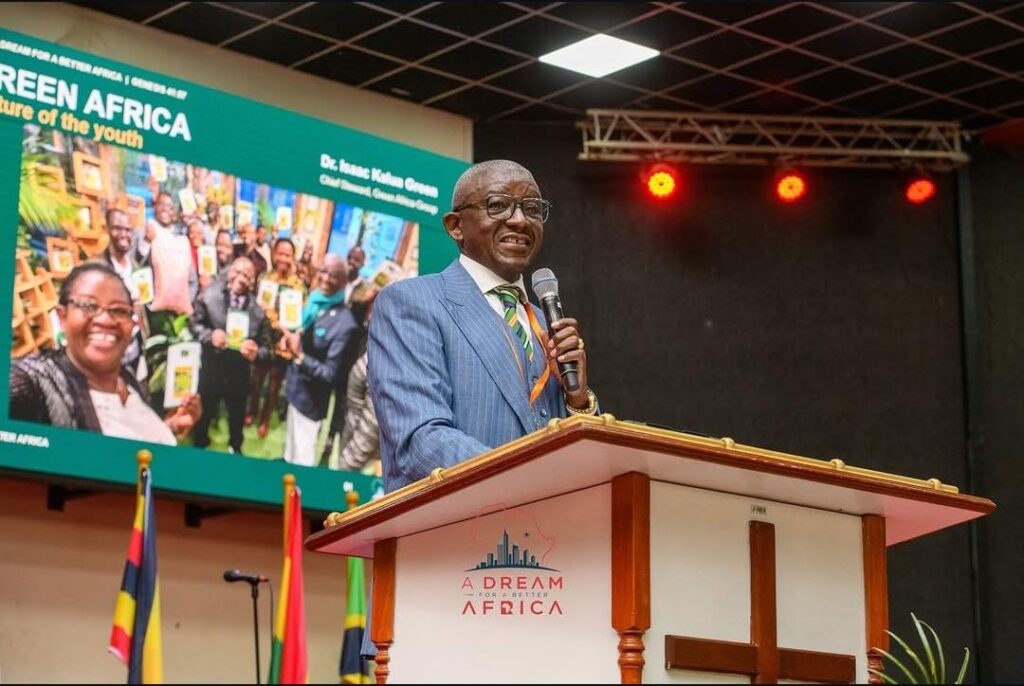
A country can gather its people endlessly and still fail to equip them. At Christ Is the Answer Ministries (CITAM), I saw an institution take that distinction seriously.
The CITAM Business Forum conference and expo, themed “A Dream for a Better Africa,” brought enterprise into a place of faith. As a guest speaker, I felt privileged to address thousands, including Muslims and people of other faiths. Shared opportunity had brought us together.
But the most significant work had begun before the conferencestarted.
I was elated to learn that more than 100 young innovators participated in a two-month training program associated with the inaugural Youth Investment and Technology Hub. I watched eleven finalists present their ventures to five judges. As a result, the top three received funding yesterday (last Saturday) and will receive mentorship going forward.
That sequence matters: preparation before presentation, scrutiny before funding, and guidance alongside funding.
The exhibition brought together more than 100 businesses. Its doors, still open this Sunday, welcomed delegates and the public, allowing entrepreneurs to showcase products and engage potential customers. The church created opportunities for people to contribute, not merely asking them to listen.
Sessions linked faith and stewardship to customer validation, generosity, and global brands.
Surely, this is the example worth replicating, not merely the event.
Government must fulfill its responsibilities. But holding it accountable does not prevent an institution from teaching a skill, connecting a mentor, or paying a young supplier fairly. We must not outsource every possibility to the State.
Afrobarometer’s April–May 2024 Kenya survey found that 70 percent of adults trusted religious leaders somewhat or a lot. What practical difference should that confidence make?
A congregation offers an opportunity that a political rally alone cannot: people return. Someone can bring a quotation next week, ask why an order lost money, or seek help correcting business records. Regular contact makes follow-through possible, but it does not make it automatic.
Kenya’s 2024 FinAccess survey found that 84.8 percent of adults accessed formal financial services. Yet only 18.3 percent were classified as financially healthy, based on meeting daily needs, coping with shocks, and investing in future goals.
These figures do not make poverty a failure of knowledge. They challenge us to connect access with capability, decent incomes,and fair opportunities. Everyone should understand costs, repayment obligations, and cash flow, including religious leaders and trustees. Not everyone needs to own a business.
Genesis 41 links the conference’s dream to organized preparation. Joseph interpreted, proposed, and stored; by verse 57, people were coming to buy grain. The lesson I draw concerns the work between the revelation and the meal.
Who is organizing that connection in our communities?
Begin with what is already available: an accountant, a workshop, a willing buyer, an unused classroom. The young person seeking a first customer may worship beside someone who needs that service. Neither knows it.
Let young people help design the program. An accountant can teach cost accounting using their actual products. A business owner can supervise a paid trial. The institution should model transparent procurement, clear specifications, and prompt payment.
Make the work green and useful: maintain rainwater systems, repair equipment, reduce food spoilage, and improve resource efficiency. Establish demand before buying machinery. Record what changes.
Protect worship from commercial pressure. Participation must remain voluntary, personal information protected, and accounts transparent. Welcome people of all faiths. Never let spiritual trust become a shortcut around sound financial judgment.
Other churches, mosques, and religious organizations can adapt this approach. Start with a manageable group, designate mentors, and schedule a ninety-day review. Ask what participants can now do, what customers bought, and what needs correction. I advocate a discipline of thinking carefully, testing ideas, building responsibly, and returning to check results.
Leadership means changing what happens within the institutions already entrusted to us. Before asking what the country lacks, let’s ask whose ability your institution has not yet discovered and what it could help that person achieve. Think green, act green.