
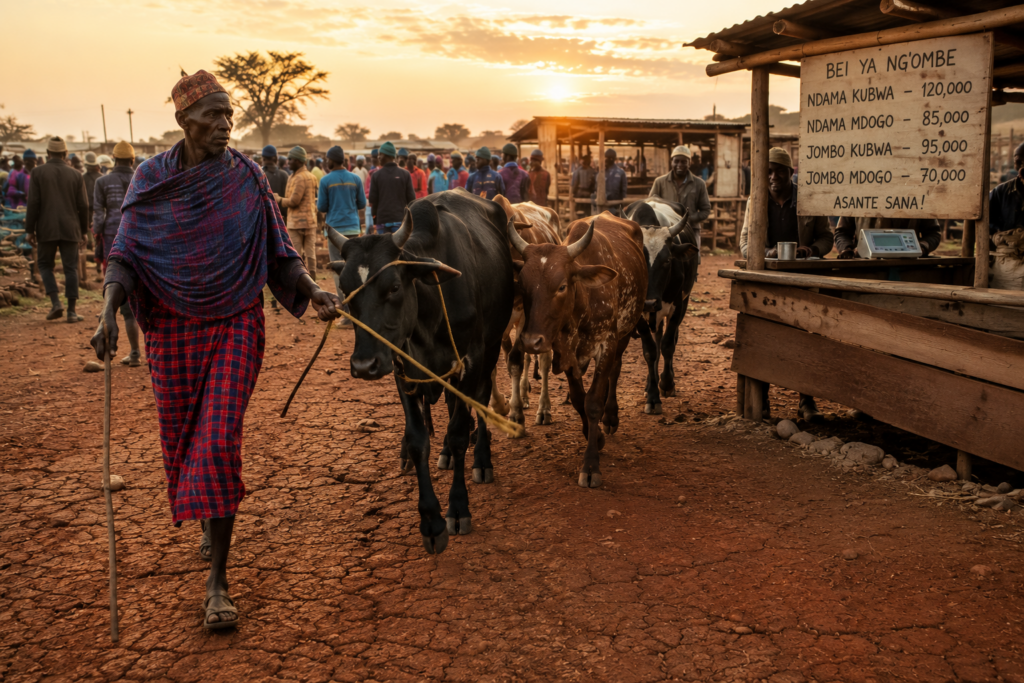
In Kavisuni market in Kitui, a livestock farmer named Mutonga once boasted that he did not need arithmetic because his eyes could count cattle. By sunset, he had sold three of his bulls, bought lunch for his buddies, paid the broker handsomely, paid transport twice, and arrived home with less money than the price of one calf. His wife looked at him and said, “Your eyes counted the cows, but your pocket counted the truth.” Kenya is now learning the same lesson.
Last week, my attention was drawn to the 2026 Economic Survey, released at the end of April by the Kenya National Bureau of Statistics. The figures I took the time to study were more than just numbers; they were a national mirror. In 2025, Kenya imported goods worth about KSh 2.77 trillion and exported about KSh 1.11 trillion, leaving a trade gap of roughly KSh 1.65 trillion. This means that for every ten shillings we bought from the world, we sold back only about four.
Here is the scenario that should disturb every boardroom and every kitchen. Our top five exports, tea, cut flowers, vegetables and fruits, apparel, and unroasted coffee, earned about KSh 505.6 billion. Petroleum products alone cost about KSh 511.5 billion. One import swallowed five export champions. Clean public transport is therefore not a climate luxury. It is foreign exchange protection, from electric buses to rail freight and efficient logistics, including solar-powered cold rooms.
The import bill is not our enemy but our teacher. Fats and oils worth about KSh 158.8 billion tell farmers, banks, and counties to take sunflower, soya, canola, and groundnuts seriously. Wheat imports of about 2.23 million tonnes, compared with local production of about 254,900 tonnes, tell us to rethink bread, seed, irrigation, storage, and climate-smart grain zones. Iron, steel, machinery, and vehicles tell our engineers, jua kali artisans, universities, and investors where industrial courage must go.
Then there is the quiet embarrassment of meat. This week, I met a buyer seeking 700 bulls for a Ramadan slaughter program who struggled to find a reliable local supply. Yet Kenya has vast drylands, skilled pastoralists, and rising demand for quality halal goat, sheep, and beef in the Middle East and beyond. The lesson is not that livestock should dominate the economy. The lesson is consistency. Markets do not buy potential. They buy traceable animals, predictable volumes, disease control, cold chains, abattoirs, contracts, and trust.
Interestingly, Kenya both imports and wastes. Our postharvest strategy estimates that food loss in selected value chains costs about KSh 72 billion annually. That is money rotting between farm and plate. Import replacement is therefore not only about planting more. It is about efficient harvesting, drying, cooling, processing, branding well, and selling together.
I suggest that every county hold a green import conversation. What do we import most? What do we export too raw? What do we waste quietly? What can our people produce, process, repair, or replace without destroying nature? From those questions emerge oil crops in Kitui, goats in Isiolo, mango drying in Makueni, coffee roasting in Nyeri, wheat trials in Narok, electric charging in Nairobi, and cold rooms in every serious market.
We, citizens, must deliberately track what we buy. Our youth must form enterprises for aggregation, processing, and repair. Our governments must map their top import opportunities and build water, roads, storage, and markets around them. National leadership must align credit, standards, research, veterinary systems, energy, and procurement.
A country that respects numbers stops giving its future to careless consumption, as Mutonga did. For sure, Kenya’s import bill is a map, not a curse, and the question is whether we will read it with unmatched courage and then invest where the numbers have been pointing for many years. Kenya’s best foreign exchange earner is the shilling we no longer send abroad. Think green. Act green!