
In Greek mythology, Sisyphus was condemned to roll a heavy stone uphill every day, only for it to roll back down just before reaching the top. An endless cycle of effort without progress.
Sometimes, Kenya’s relationship with rain feels uncomfortably familiar. But it’s not a curse; it’s a choice. The rain arrives, we panic, we react, we issue statements, it leaves, and we forget until the next season shows up.
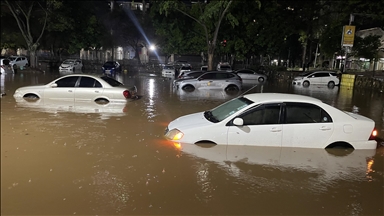
Yet this is not just a weather event. It is a planning failure. Floods have taken lives, displaced thousands, and disrupted livelihoods across counties. The tragedy is not that rain has fallen, but that it keeps falling on a system unprepared to guide, store, protect, and use it.
This is the Kenyan contradiction. We flood in one season and thirst in the next. We speak of water harvesting, yet allow runoff to destroy farms, homes, and roads. According to the World Bank, Kenya stores about 103 cubic meters of water per person, compared with roughly 876 across Africa. The message is simple. We do not lack rain. We lack systems to hold it.
Kenya has many ideas. Policies and strategies recognize different water harvesting methods. What remains limited is implementation. We are better at announcing frameworks than actually maintaining the systems that sustain life.
To be fair, the national government has taken bold and commendable steps on environmental enforcement and restoration. These efforts deserve recognition as a shift in intent. However, progress should not lead to complacency. What was not done before does not make partial action sufficient today. What is right must now be done with unmatched boldness, consistency, and urgency across all institutions.
Consider Nairobi Dam. What is now seen as a crisis should have been addressed through routine management years ago. A dam does not fail overnight. It deteriorates over time due to neglect, poor waste management, siltation, encroachment, and delayed maintenance until it becomes a crisis. We suffer not only from sudden disasters but also from slowly ignored responsibilities.
If people need to be relocated from waterways, it must be done firmly and fairly, regardless of status or cost. Rivers are non-negotiable. Nairobi Dam must be desilted immediately as it is overdue.
This is not just a city story; it is a village story. Smallholder farmers produce most of Kenya’s food but bear the greatest losses. Rain washes away their soil and leaves crops to dry. Those who feed the nation should not have to rely on luck when it rains.
The truth is straightforward. Floods are not disasters; they are water we didn’t store.
Kenya’s water security won’t come from endless debates over a few large projects. It will come from disciplined maintenance, regular desilting, protected catchments, enforced riparian zones, and practical local solutions, including community dams, water pans, and accessible storage such as household and shared tanks. The answer isn’t a single miracle; it’s many functioning systems.
Citizens are already doing their part through farming, enterprise, and daily effort. The government must now match this with coordination, accountability, and discipline. Counties need to map ward-level water harvesting and fund maintenance before the rains. The national government should enforce standards and invest in storage, not just emergencies.
Leadership is measured not by response but by prevention. The rain has done its part. Will we match it with discipline?
As I received a national honor last Friday at the DIAR Awards, where I was humbled to be recognized as a Taifa Patron and the Green Africa Foundation as a Taifa Champion in leadership, inclusion, equity, impact, and sustainability, that image came to mind. Not as a celebration, but as a reminder. Recognition must never become routine.
A serious nation doesn’t let water be wasted one season and vanish the next. That isn’t fate; it’s a systems failure, as the World Bank shows. Kenya needs to shift from feeling to systems, from emergencies to engineering, and focus on storage. We must stop pushing the boulder uphill. Think green. Act green.