
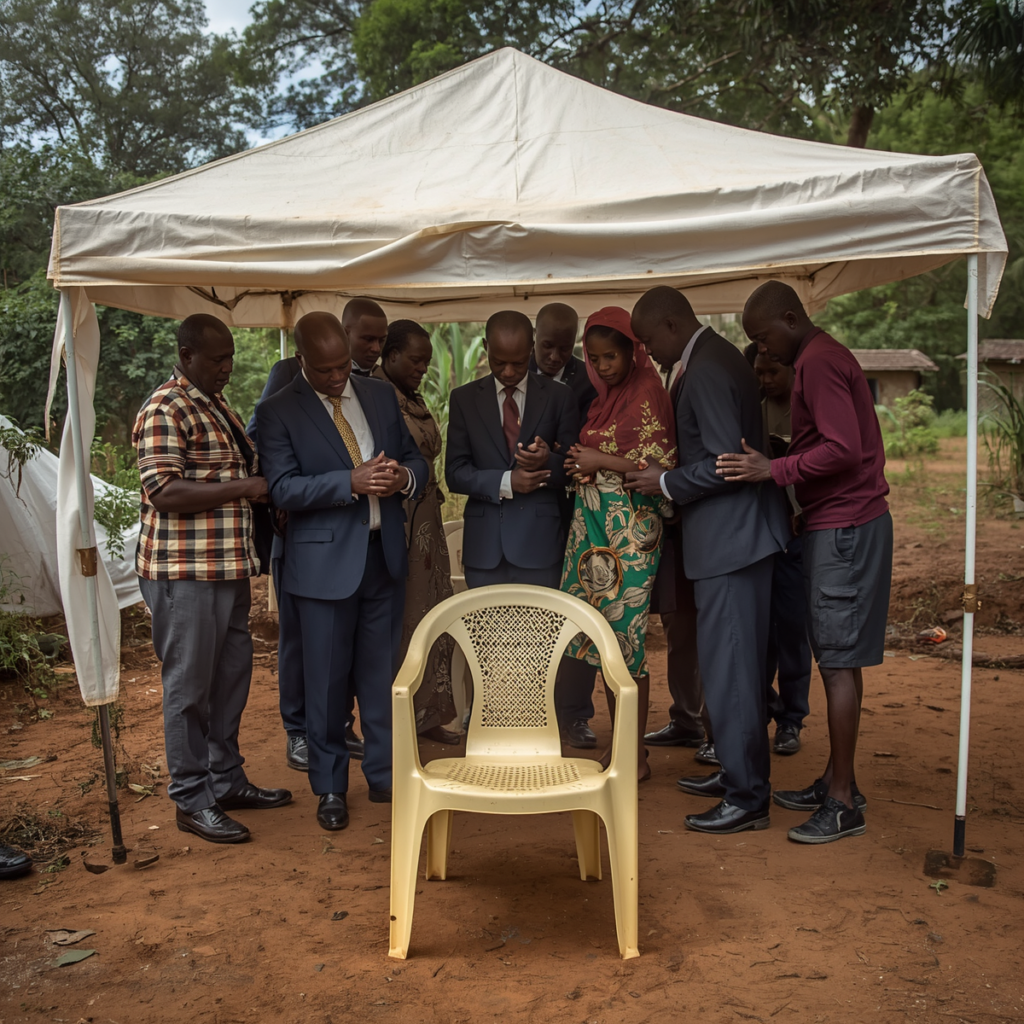
We Kenyans think funerals are private family ceremonies, but they are not! They are among the largest classrooms for our national character.
The Kenya National Bureau of Statistics reports that in 2025, Kenya recorded 217,601 deaths. That means about 596 households entered mourning every day, almost 25 an hour, or one every two and a half minutes. Before Parliament speaks, before television panels argue, before campaign rallies roar, Kenya has gathered under tents, beside graves, in churches, school fields, and on village roads to decide how grief will be treated. Friends, that is the reality.
If humility rules there, the nation learns humility. If disorder rules there, the nation rehearses disorder. What happens around the local grave quietly shapes the national mood.
The failure has a name. It is Funeral Capture. It occurs when sacred mourning space is seized by interests that did not suffer the loss. The family becomes the background, the departed becomes a slogan, and mourners become a ready crowd. Chiefs turn burial into community Barazas, aspirants test slogans, and leaders arrive late, shamingly, asking to speak first because another burial is waiting. We smile politely, yet the social soil is eroding.
Funeral reform is also economic reform. Long-captured programs inflate costs for tents, transport, meals, security, and waiting time. The poorest families carry the heaviest burden because they cannot easily refuse help tied to a microphone. A first-mourner culture saves money, time, and dignity.
A nation is also an ecosystem. When one species overdominates a forest, balance is lost. When politics takes over grief, culture is corrupted. We cannot plant trees with discipline and poison our most tender human gatherings with indiscipline. Every funeral counts because each funeral teaches citizens what power may do to the vulnerable.
That is why the burial of a family member John Kariuki Muraya, KY, Kahoni, in Murang’a last Friday deserves national reflection. There, order served love. The sermon was precise. Leaders and administrators were respectfully recognized, but they were not allowed to take center stage. The family was given time, friends listened, and John’s life was allowed to preach.
And what a life it was. From Pumwani to Kahaini, from telephone cables to America, from business studies to computers, from flight lessons to deep-sea work, from Dallas back to Kenya, John kept reaching for wider horizons. Later, he saw in solar energy not a slogan but a future, and he pursued it with patience, believing the sun over Kenya could light households, not just conferences.
He also taught a harder lesson. Human families are not straight lines. They carry love, separation, children, adoption, old bonds, new branches, illness, forgiveness, faith, and unfinished dreams. At his burial, what could have been hidden was handled with grace. That is nation building. A country that learns to hold complex families with dignity will learn to hold complex politics without hatred.
Kenya’s Constitution speaks of human dignity, national unity, integrity, good governance, and sustainable development. Those words are not for courtrooms alone. They must enter the funeral program, the church microphone, the chief’s file, the politician’s heart, and the family tent. Leadership does not create value. It protects, enables, or destroys it.
So let us set a public standard worthy of the pain families carry. Citizens must stop rewarding disorder simply because it arrives in a large car. Every family should agree on a mourner-first program before burial day. Everyone else, including politicians, even as elections near, must honor family wishes, come as mourners first, give quietly, sit patiently, and save campaign speeches for rallies.
Honestly, at a funeral, the greatest speech a leader can deliver is restraint.
John Kariuki Muraya has gone to rest, but his burial has left Kenya with a living lesson for citizens. Let politics hold rallies. Let families hold funerals. Let the dead teach us how to live. When we protect mourners, we protect the Republic. Think green. Act green!