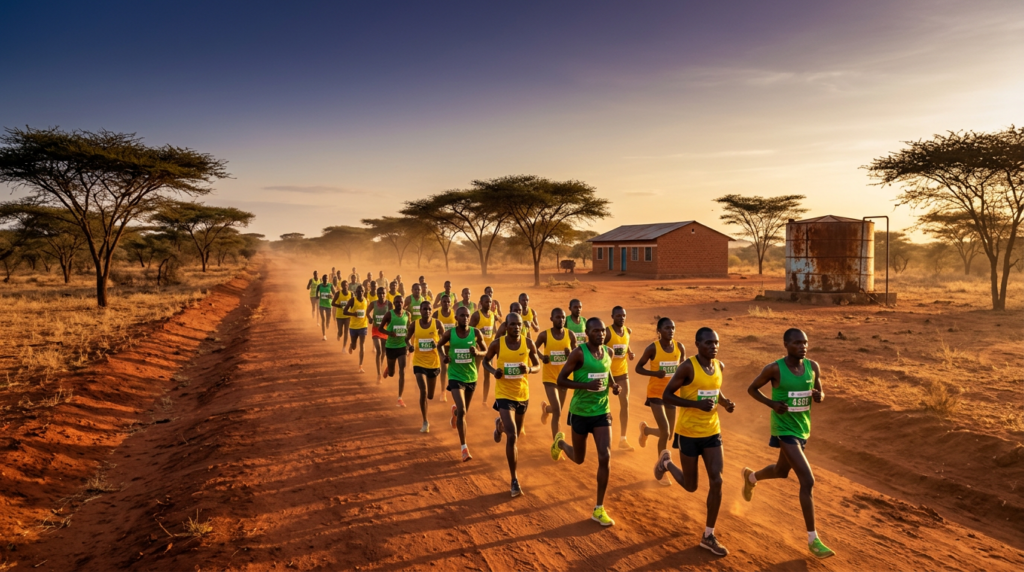
This week as I prepared for the ‘Kitui Run for Rain’ race, the country woke up to yet another school tragedy where sixteen girls died at Utumishi Girls Academy in Gilgil, Nakuru County. In the midst of the inferno that police now believe to have been started by fellow students, desperate girls pressed against a locked emergency exit that should never have been bolted, in a dormitory overcrowded beyond capacity. It turned out that two teachers, chose not to act despite advance warning of trouble. A familiar tale that always come back like a bad dream.
Leaders of various kinds and other concerned citizens have rightly condemned the series of avoidable events that have now left many parents grieving for the young lives cut short. But the truth is that we’ve simply refused to act on what we know. It reminds one of the old management problem-solving metaphor — ‘how to put an elephant in a refrigerator.’ In a room full of experts, the answers to that problem grow complicated very quickly. Someone calls an engineer, someone demands a bigger fridge, and someone else forms a committee. Then the child in the corner speaks: open the door, guide the elephant in, and close it, because nobody told you the size of the fridge relative to the elephant.
I must say that Kenya’s approach to its most urgent challenges suffers from exactly this habit, making the achievable look impossible by arguing around what could simply be done. Just how many schools have seen exactly this kind of tragedy? Just how many task forces have set up to investigative school arson? Just how many students do we have to lose for us to simply do what a responsible country does — keep its most vulnerable populations from harm?
These are the reflections we take to Kitui this weekend as we host the Run for Rain race. It is our small way of showing how to simply ‘put the elephant inside the fridge.’ The world has seen charity runs, elite marathons, and corporate wellness events, but the Kitui Green Run, Run for Rain, offers a harder, more original idea, aimed at solving a real problem.
Kenya ranks among the greatest running nations on earth, with 124 Olympic medals and 151 World Athletics medals, second only to the United States. Yet millions of Kenyan children begin each school day without reliable, clean water. One in three schools nationally lacks access to safe water, and one in two lacks adequate sanitation. A nation that exports endurance to the world must apply that same endurance to solving the problems of thirst and dignity at home.
From the race we hope to inspire the country to see schools, land, water, and communities as connected, not as separate issues. When young people have opportunities in education, sports, and community life, they are less likely to be drawn into destructive paths. We hope to inspire what I call a ‘Rain Bank’, a system where every rooftop is a catchment, every school a deposit point, every community an account holder of rain that heaven sends and drought steals back. This water will mean time returned to a mother who often has to walk long distances in search of the precious commodity, health returned to a child whose future now looks bleak, food returned to a farm that has laid bare season after seasons, and dignity returned to people who deserved it all along.
The old metaphor was never about an elephant. It was about the courage to do what is obvious before it becomes a tragedy. Sixteen girls pressed against a locked door and never came home. Rain falls on rooftops without gutters, on schools without tanks, and on dams quietly dying of neglect across this nation. The door to Kenya’s future is not locked. It never was. All that remains is the will and the courage to open it. Think green. Act green.