
My father taught me a discipline — always know what matters around you. Not gossip, but signals. Not noise, but direction. That habit strongly drew me to Kwale County this past weekend for the Mashariki Cooperation Conference 2026, themed “Emerging Geopolitical Dynamics and Africa’s Security Architecture.”
This was not a routine gathering. Security and intelligence chiefs met with policymakers, and participation was reported from seventy-six countries. The conversations were blunt: terrorism is adapting, climate change is disrupting livelihoods, technology is shifting power faster than laws can keep pace, and the global order is becoming more complex.
Following these conversations, my green message was clear: Africa’s immense opportunities should not turn into a nightmare.
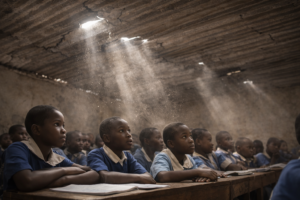
Start with people. About sixty percent of Africa’s population is under twenty-five, and by 2050, one in three people aged fifteen to twenty-four worldwide will be African. That is the greatest workforce opportunity. It is also the greatest leadership test. If we reduce youth to a slogan instead of a plan for skills, decent jobs, and dignity, the dividend becomes disillusionment, and disillusionment becomes instability.
Trade is next door. Full implementation of the African Continental Free Trade Area could raise income by about seven percent, roughly four hundred and fifty billion dollars, and lift about thirty million people out of extreme poverty by 2035. But trade cannot outlast insecurity, graft, or institutions treated as temporary tents. Markets need predictable rules. When trust collapses, states spend more on control than on opportunity, and nobody wins.
Then there is the resource whirlwind. Africa supplies about seventy-five percent of global manganese and seventy percent of cobalt, yet captures less than one percent of the value from manufacturing clean-energy technologies and their components. If extraction expands while value addition remains low, we will export minerals, import anger, and be surprised when communities resist projects that never deliver prosperity.
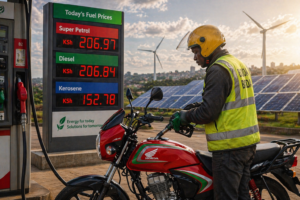
Climate change makes every failure more expensive. Africa needs about 2.8 trillion dollars between 2020 and 2030 to implement its climate plans, leaving a gap of about 2.5 trillion dollars, nearly eighty percent unmet. African countries are already losing between two and five percent of GDP on average and diverting up to nine percent of their budgets to respond to climate extremes. The Intergovernmental Panel on Climate Change reminds us that Africa is among the lowest contributors to global emissions, yet key sectors are already experiencing widespread losses and damages.
The security edge is sharpest in the context of terrorism. The Sahel accounted for fifty-one percent of global terrorism deaths in 2024, with three thousand eight hundred and eighty-five lives lost. The technology displayed in Diani made one thing clear: capability is becoming cheaper. Drones were the most vivid symbol. Evidence shows that non-state armed groups in Africa are increasingly using drones, often commercially available, especially for surveillance and propaganda. I also saw how AI-enabled dashboards can sift through public social media conversations in near real time. This is useful for early warning, but dangerous without independent oversight.
This is why I appreciated President Ruto’s framing, delivered without theatrics: strengthen Africa’s security architecture, deepen intelligence cooperation because threats cannot be contained within borders, and reform the African Union so Africa can build solutions within Africa rather than outsource them. His words carried additional credibility because he recentlymodeled leadership by compliance, directing the demolition of a section of the State House Nairobi boundary wall along the Kirichwa Kubwa River riparian reserve. That act carries a quiet lesson: trust is built when rules apply upward as well as downward.
My advice to Kenya’s leadership, government, and opposition alike is simple, respectful, and urgent: stop bickering long enough to look ahead. Invest in preparedness before a crisis forces improvisation. Treat youth employment, value addition, and climate adaptation as matters of national security. Govern technology with safeguards, because a tool that protects today can be weaponized tomorrow. Think Green. Act Green.